
What’s an angle grinder?
2025-12-17
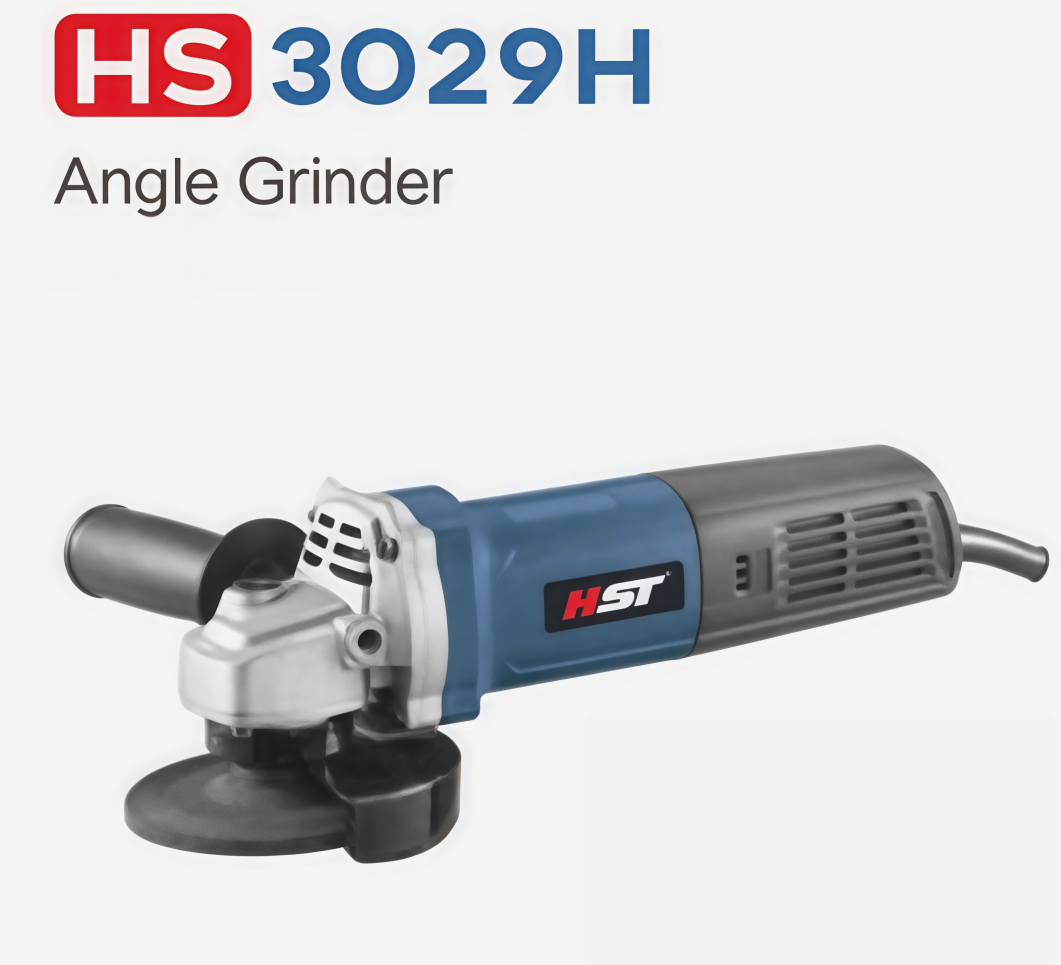
Also called a side grinder or disc grinder, it’s a handheld power tool for grinding (abrasive cutting) and polishing.
German company Ackermann + Schmitt (now FLEX-Elektrowerkzeuge GmbH) invented the high-speed version in 1954 in Steinheim an der Murr.
Angle grinders run on electricity or compressed air. Their motor drives a right-angle geared head, where you can attach abrasive discs or thinner cut-off discs—both replaceable when worn out. They usually have an adjustable guard and a side handle for two-handed use. Depending on their speed range, some can work as sanders with a sanding disc and backing pad (made of hard plastic, phenolic resin, or medium rubber, depending on flexibility needed).
Though originally made for rigid abrasive discs, their interchangeable power source lets them work with many other cutters and attachments.
They’re commonly used in metal fabrication, construction, machine shops, auto repair shops, and even emergency rescues—sadly, sometimes to steal bikes. You’ll find them in workshops and garages too.
There are lots of types, varying by disc size, power source (battery, corded, or pneumatic), motor power, rpm, and arbor size. Usually, bigger discs mean more power. Sizes are in inches or millimeters: in the US, common sizes are 4, 4.5, 5, 6, 7, 9, and 12 inches (4.5 and 5 inches are most popular); in Europe, 115mm and 125mm are standard.
Angle grinders remove excess material from workpieces. Different discs handle different jobs: cut-off discs (like diamond blades), abrasive grinding discs, grinding stones, sanding discs, wire brush wheels, and polishing pads. Unlike power drills (which handle axial force), they have strong bearings to counter side forces from cutting.
They’ve even been used to remove wheel clamps from cars.
But they release lots of tiny breathable dust—sometimes as small as PM1. The type of disc (fibre or grinding wheel) affects dust size. Too much dust breaks air pollution laws and can bring fines, but good dust collectors (like hoods) cut dust by 80-90%.
Cutting with an angle grinder isn’t ideal: it makes more harmful sparks, fumes, and particles than reciprocating or band saws. Cutting ferrous metals creates sparks; other materials make shards. Blades can break, risking injury—especially to the face and eyes. So always wear a full face shield and protective gear. Never use one without its guard or handle, and clamp workpieces securely (in a vise, for example).
Unloaded grinders make noise between 91 and 103 dBA, according to a US National Institute for Occupational Safety and Health study.
Angle Grinder
The 138th Canton Fair booth number 10.2 C18-19. 15th to 19th. October, 2025.
